streamlit-recommenders
Turn a trained recommender into an interactive, inspectable web demo in a few lines of Python.
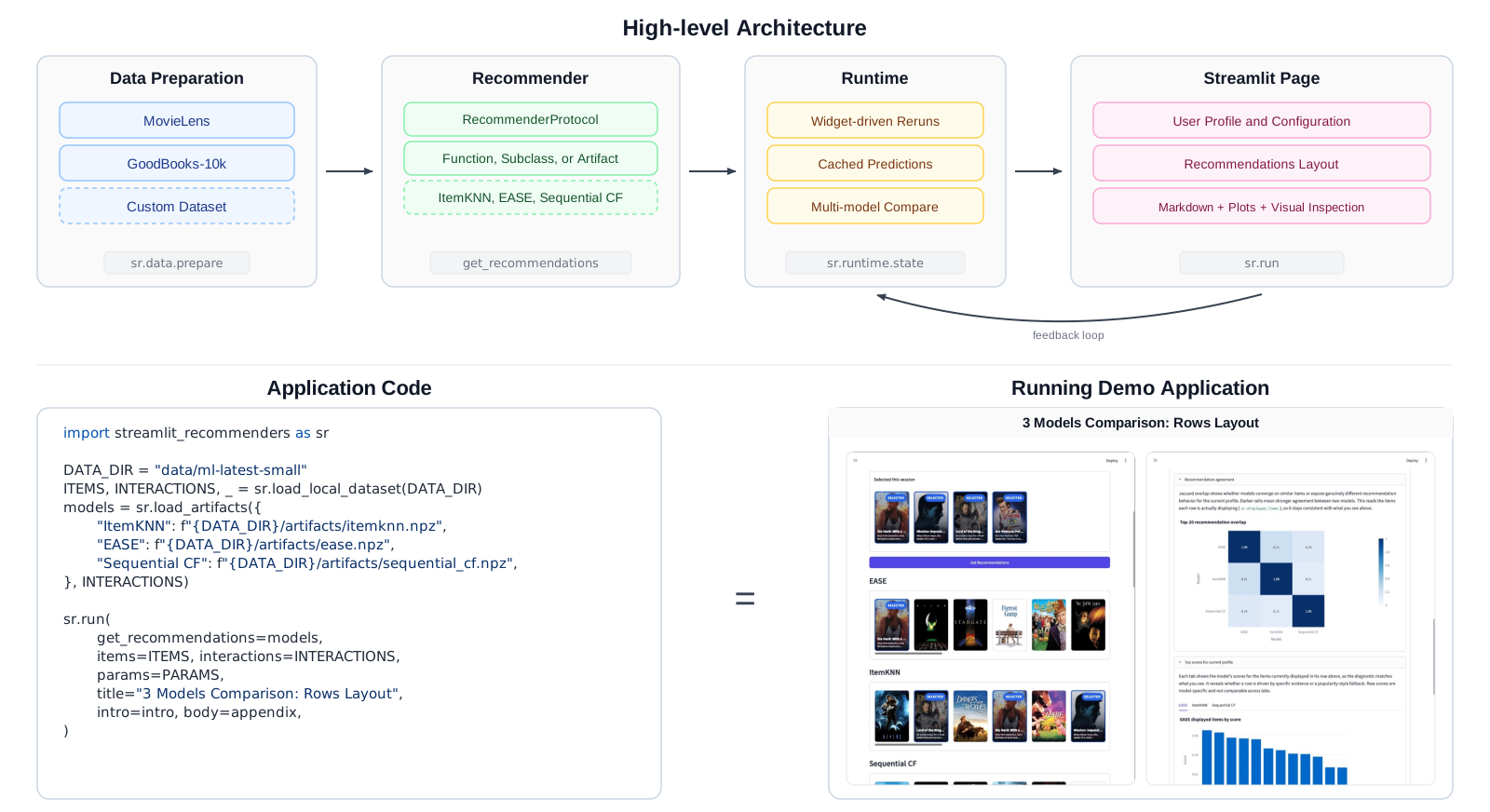
streamlit-recommenders is a thin presentation layer between your recommendation model and an
interactive Streamlit app. You bring a function (or object) that returns
ranked item ids; the library owns the UI, caching, session profile, side-by-side comparison, and
light evaluation. It ships no models — what recommends is entirely yours.
Why inspect, not just measure?
Reproducibility in recommender-systems research usually stops at aggregate offline metrics. Whether a model actually behaves sensibly — for individual users, across parameter settings, against baselines — stays invisible unless someone builds a demo, and building demos is frontend work most researchers would rather skip. This library removes that barrier so an inspectable demo can ship alongside a paper.
60-second quickstart
import streamlit_recommenders as sr

ITEMS = sr.load_items("data/items.csv")
INTERACTIONS = sr.load_interactions("data/interactions.csv")
POPULARITY = INTERACTIONS["item_id"].value_counts().index.tolist()

def get_recommendations(user_id, k, session_items=None, **params):
    exclude = set(session_items or [])
    return [item_id for item_id in POPULARITY if item_id not in exclude][:k]

sr.run(get_recommendations=get_recommendations, items=ITEMS, interactions=INTERACTIONS)
Replace the function body with your model and you have an inspectable demo.
Where to next
- Getting started — install, prepare a dataset, and run your first demo.
- Concepts — the ideas the library is built on:
- Recommender contract — the one function to implement, three ways to plug in.
- Data contract — the small pandas schema your tables follow.
- Feedback & session — how the profile, likes/dislikes, seen-filtering, and fallbacks work.
- Inspection views — layouts, metrics, and plots, and who provides what.
- Architecture — how a demo flows through the library.
- Guides — task-focused walk-throughs:
- Datasets — MovieLens & goodbooks preparation, TMDB posters, bring your own.
- Training & artifacts — export
.npzbaselines and the artifact format.
- API reference — generated from the source docstrings.