Architecture
streamlit-recommenders is a thin layer between your recommender and an interactive demo: you
provide recommendations through one small contract, and the library owns everything interactive.
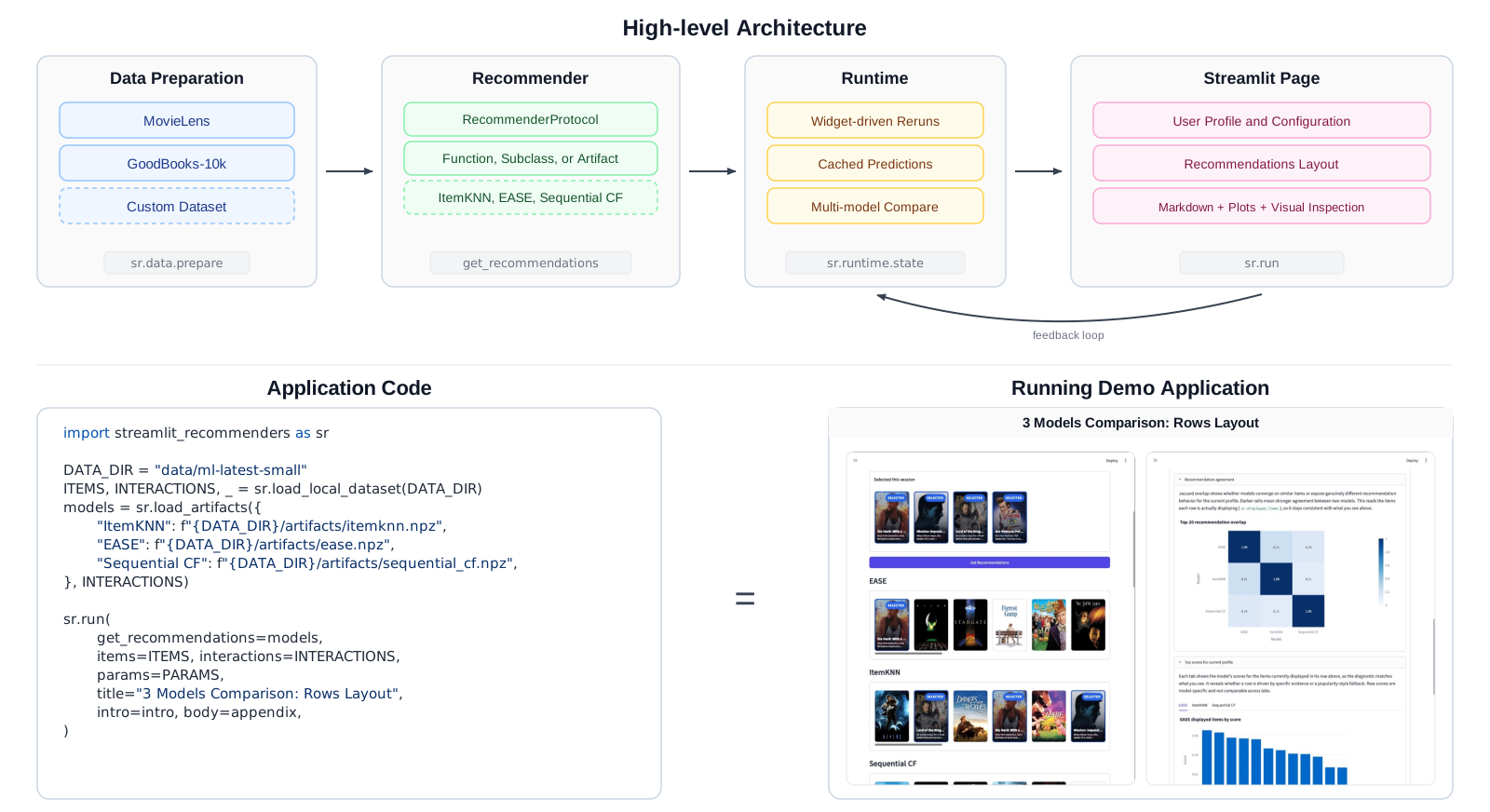 TODO
TODO
The rest of this page zooms in through three levels — the idea, who owns what, and the module map.
Level 1 — The idea
You bring data and a way to produce ranked item ids; you get an app that lets anyone inspect, compare, and probe the model.
flowchart LR
  data["items · interactions"] --> lib["streamlit-recommenders"]
  model["your recommender<br/>function · subclass · artifact"] --> lib
  lib --> app["interactive app<br/>inspect · compare · probe"]
Level 2 — Who owns what, and the session loop
You own the data and the recommendations. The library owns the session profile, caching, comparison, metrics, and layouts. What the user does on the page (click, like, dislike, skip) feeds back into the profile and refreshes the recommendations.
flowchart LR
  subgraph YOU["you provide"]
    d["items · interactions"]
    f["get_recommendations()"]
  end
  subgraph LIB["the library owns"]
    s["session profile & feedback"]
    c["caching + model adapter"]
    cmp["side-by-side comparison"]
    viz["metrics + plots"]
    lay["layouts: rows · grid · cards"]
  end
  subgraph UI["you see & do"]
    cards["poster cards / swipe deck"]
    plots["profile strips · plots · tables"]
  end
  YOU --> LIB --> UI
  UI -. "click · like · dislike · skip" .-> LIB
The profile a model scores against is the union of the selected user's history and their current-session interactions; see CONTRACTS.md for the exact shapes and the step-by-step session flow.
Level 3 — Module map
One sr.run(...) call wires four groups together. Nothing model-specific lives in the library:
the contract is just get_recommendations, and the reference baselines are in examples/.
flowchart TB
  run["runner.py — orchestration<br/>(sr.run)"]
  data["data/ — loaders + prepare<br/>MovieLens · goodbooks · TMDB"]

  subgraph contract["the contract"]
    models["models/ — protocol + adapter"]
    recs["recommenders/ — BaseRecommender · ArtifactRecommender"]
  end
  subgraph internal["runtime/ — internal state"]
    cache["cache"]
    state["state · seen"]
    compare["compare"]
  end
  subgraph present["presentation"]
    layouts["layouts/ — rows · grid · cards"]
    widgets["widgets/ — params · profile"]
    vizmod["viz/ — plots · dataset_info"]
  end

  data --> run
  run --> contract
  run --> internal
  run --> present
Request flow: sidebar params + selected user → cached get_recommendations() (via the
adapter) → ranked item ids stored in session state → poster carousel / swipe deck. A click updates
the session profile; Get Recommendations recomputes every compared row against the same
evidence.
Boundary
The library owns the interactive inspection layer, not model training. Training frameworks
standardize offline experimentation; streamlit-recommenders standardizes how a trained
recommender is displayed, compared, and probed with session feedback.
- Data prep lives in the library (
streamlit_recommenders/data/prepare/):prepare_movielensandprepare_goodbooksdownload and normalize into the local schema, TMDB enrichment is robust (retry/backoff, completeness report), and adataset.jsonmanifest (is_complete) makes preparation idempotent. - Models do not. The library ships only the
BaseRecommendercontract and theArtifactRecommenderloader. Reference baselines (ItemKNNRecommender,EASERecommender,SequentialCFRecommender) live inexamples/reference_recommenders.pyas copy-and-adapt starting points. Heavy frameworks (RecBole, Cornac, RecPack, LensKit, Elliot) stay external, reached through the recommender contract rather than added as dependencies.